

Para la versión en español, cliquea aquí
Synopsis
El Faro del Sur (1998) begins when two sisters: 20-something Meme and her much younger sister Aneta, survive a car accident that takes the lives of their younger brother, and their two parents. Meme, who is left lame, must now take charge of her sister and try to move forward despite their shared tragedy.
While Argentina has long been a center for art and culture, with its capital seen as the “Paris of Latin America”, the country’s ever-changing political landscape and economic instability have always led to a great deal of migration, particularly to Uruguay, its neighboring country. While often viewed as the little brother to its much larger neighbor, many Uruguayan cities such as Montevideo and Punta del Este have always seen large numbers of Argentines go there on vacation or long term. Thanks to Uruguay’s general stability and sandy beaches, it’s often a nice alternative for Argentines looking for peace and quiet. Ironically in Eduardo Mignogna’s El Faro del Sur, the two Argentine sisters, Meme and Aneta’s constant movement between different Uruguayan and Argentine cities leads to a hopeful but chaotic coming-of-age story.
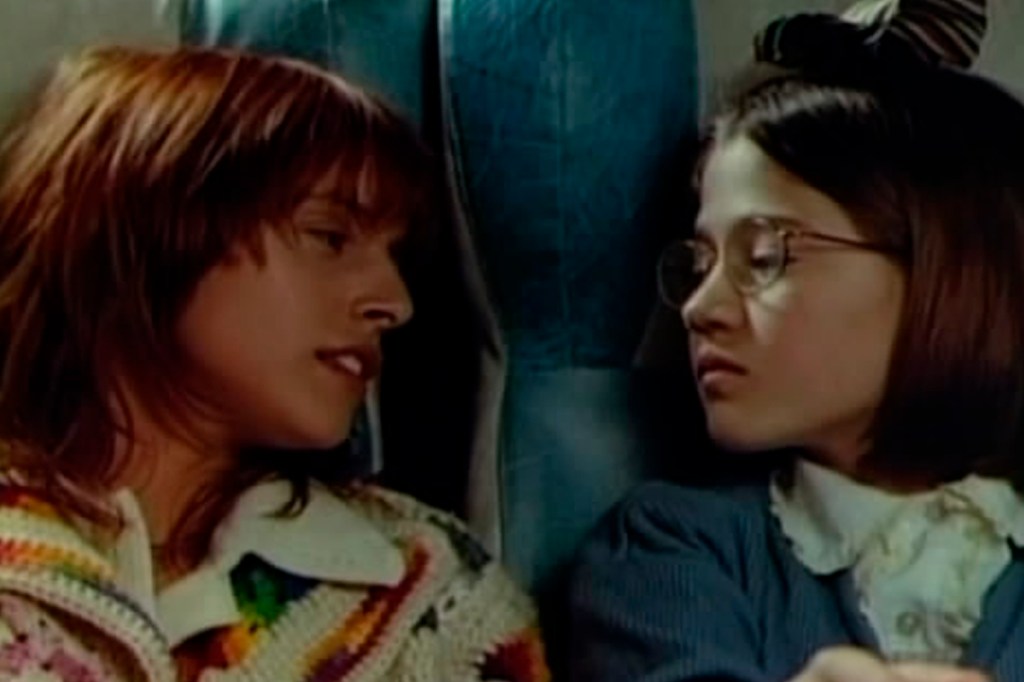
The two sisters are othered by their outsider status and their own personal tragedies, particularly the oldest daughter: Carmela, or “Meme”. Since the family had lived in Spain for most of her formative years, she is the only one with a Spanish accent and the accident has left her with the only physical ailment: a badly scarred and injured leg. While Meme is plagued by several physical attributes that mark her clearly as someone who does not belong, Aneta survived the accident relatively unscathed. She is not plagued by the amount of memories Meme is and can therefore look to the future and not be tied down by the past. While one lives without memory and the other lives with too much, Eduardo Mignogna creates a relationship between two sisters who couldn’t be pulled apart if they tried.
Mignogna’s last film, Sol de Otoño, was a small, intimate picture with few locations and characters that became a massive success. His next film, El Faro del Sur, would prove to be much more ambitious with more characters, and locations, while still containing at its heart, a simple family story. During this time, Mignogna also spoke extensively about his disappointment with Argentine cinema. In one interview he said that Argentine cinema “cannot be fixed. Sometimes I see severe mistreatment of Argentine films, some critics destroy them. And sometimes they turn out well and sometimes badly. But it is not wrong to say that it is bad. What’s bad is to get carried away. And, in this sense, I hate the ratings of the little stars”. In some ways, El Faro seems like a movie by a director looking not just to please his domestic audiences, but European ones as well. With a transnational story and a European actress in the leading role, this modern melodrama is not situated within a unique Argentine community like the Jewish one in Sol de Otoño. It is as far-reaching and universal as it can be.
Still, some aspects of this melodrama cannot be separated from the time and place they emerged from. The heart of this story is about sisterhood, something people from any country can relate to, but it’s also about memory. Memory is not a particular Argentine attribute by any means, but it was a major topic of debate at a time when survivors of the past decade’s military dictatorship violence were speaking out, and Carlos Menem’s government was seeking amnesty for offenders. Meme and Aneta have to contend with their own familial violence. Is it worse to never be able to forget the loved ones that were so abruptly taken away from you or is it worse to feel like your past is a foggy memory that was stolen from you without your consent?
While the girls move constantly, the only thing they keep with them is a precious family album. For Ane, it is a kind of crutch that helps her feel connected but also leads to obsession. At times, it’s difficult for Meme to separate her from it in order to go to school. Ane’s uncertainty about her past also leads to nightmares, which only Meme can relieve. Meanwhile, Meme’s injury makes her unable to move forward. Many of the men she falls in love with are unable to accept all of her and her own inability to forget and forgive keeps her from opening up. Even her post-accident relationships have connections to the past. While in Montevideo, she becomes close with Dolores, played by Norma Aleandro, who was a close friend of her mother’s. However, the day she inevitably passes away, Meme laments that she was the sun that suddenly went down.
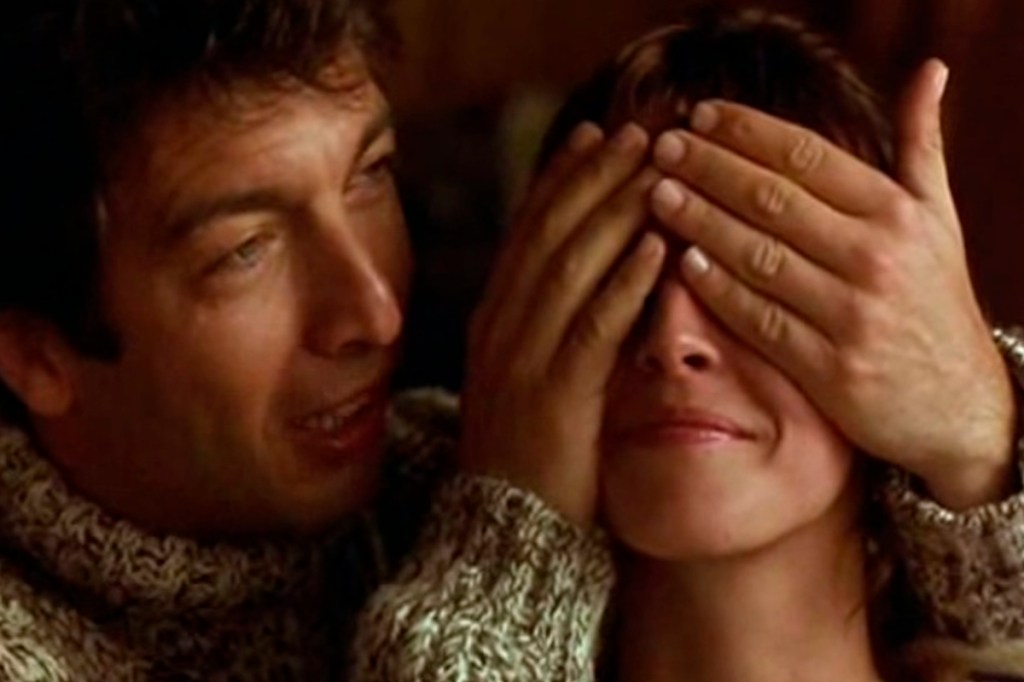
Her happiest moment is brief and revolves around her relationship with Andy (Ricardo Darin), a man who has nothing to do with her past. He takes both Meme and Ane to live in a small house by El Faro de Jose Ignacio in a small community just outside of Punta del Este. This ends abruptly when Andy can no longer handle being with her and abandons the house. This is the beginning of the end for Meme, whose health steadily declines following this incident. She is forever tied down by her personal and physical injuries, but her only point of hope becomes her younger sister Ane. Her personal struggles have an easier cure: finally visiting her parents’ grave. This closure opens a door to the future Meme can’t walk through. This is where the film shines. Aided by Eduardo Mignogna’s wife, Graciela Aguirre, the sisters’ dialogue feels extremely real, ranging from childish insults to cute games of “I love you more”.
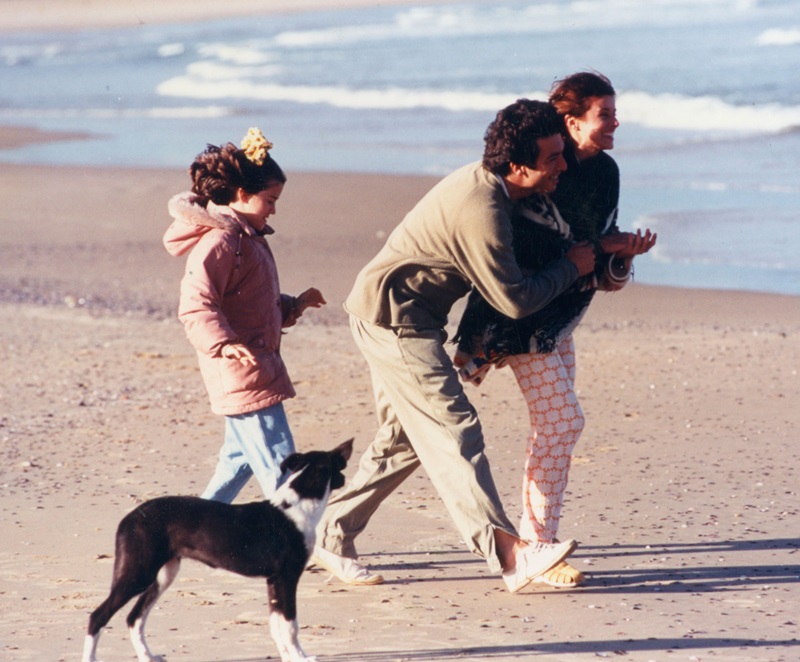
Their love for each other is passionate and strong, but it can’t last. When Meme finally succumbs to her illnesses, she leaves behind a note saying she can finally go because she knows Ane will be fine. Her job is done. Subsequently, Ane cremates Meme and spreads her ashes in the ocean, the same ocean her mother loved so much. Mignogna ends his film with an image of the girls at El Faro de Jose Ignacio while “Aquellas Pequenas Cosas” by Joan Manuel Serrat plays in the background. The song details how love and relationships may die but the small details and memories will live on forever, allowing us the privilege to laugh and cry about the people who have touched us.
 The Cine Latino Blog
One response to “El Faro del Sur & Sisterhood”
[…] For the English version, click here […]
LikeLike