


Para la versión en español, cliquea aquí
Synopsis
Tlayucan (1962) takes place in a small rural town in Morelos, Mexico. The plot centers around Eufemio, a peasant who gets desperate when his son becomes ill and they cannot afford the treatment. He decides to steal a pearl from the image of Santa Lucía in his local church. When he is caught, the town has to decide whether to punish him or let him go.
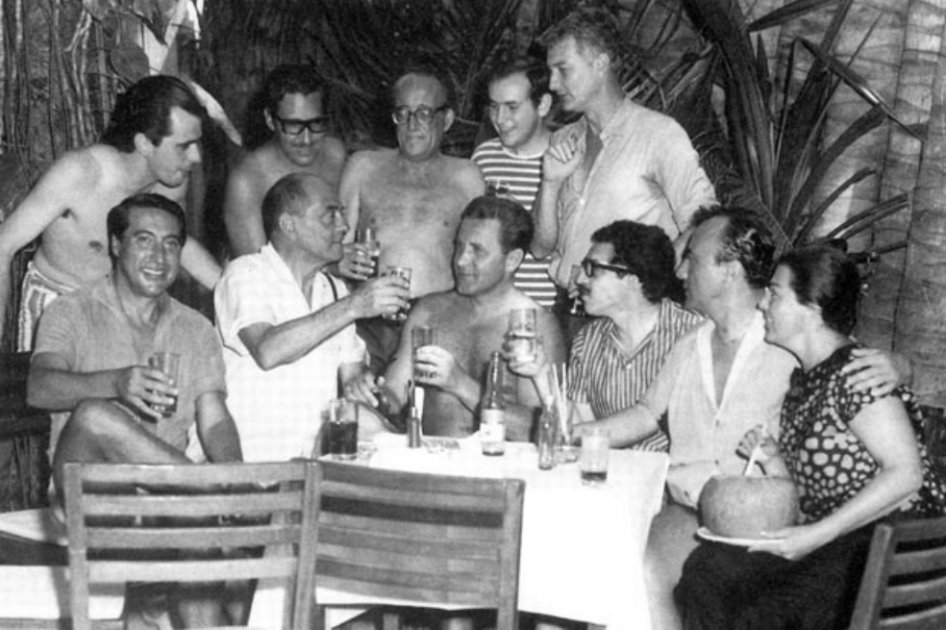
Though Tlayucan is only Luis Alcoriza’s sophomore effort as a director, he was no stranger to the film industry at this point in his career. By the end of the 1950s, he was one of Mexico’s most respected screenwriters, noted for his repeated collaboration with Luis Buñuel on movies like Los Olvidados, The Exterminating Angel, and Él. Though Alcoriza’s name is not as well known as other Bunuel screenwriting collaborators like Jean-Claude Carrière who worked with him on most of his French films, Alcoriza is equally, if not more important to the success of his career. Prior to working in Mexico, Buñuel had achieved success with silent short films like Un Chien Andalou and Las Hurdes. But since the end of the silent era, he failed to make another movie as powerful as those. When he met Alcoriza, a younger Spanish man who was also forced to flee from the Spanish Civil War and settle in Mexico, he was able to unleash his potential. Both foreigners in a strange land with a similarly dark sense of humor, Alcoriza helped reinvent Buñuel’s career.
With Tlayucan, Alcoriza was trying to do the same for the Mexican film industry. The first phrase in the press book described the film as a “new concept of Mexican cinema.” Mexico’s industry was in need of some renovation. While in 1960, 90 Mexican movies were made, the number dropped dramatically the next year when only 48 were made. As I mentioned previously in my article on Ánimas Trujano, the Golden Age was waning. Studios were closing and thanks to a shortsighted decision in 1945 to deny entry to any new members of the Union of Film Production Workers in a bid to secure means of work for its members, new people and, in turn, new ideas were hard to come by fifteen years later. It’s no wonder that Alcoriza’s film which sought to reinvigorate the industry would center around a peasant and devoted union member and a town that needed to learn a lesson in solidarity.
Alcoriza bucks storytelling trends for films set in rural Mexico that had been in place since the start of the Golden Age. Previously, in depicting rural towns in desperate need of change, filmmakers relied on the knowledgeable outsider. The doctor, the schoolteacher, or the priest all served to enrich the ignorant townspeople thanks to their education and travels. Take, for example, Rio Escondido, one of the most successful films from the Golden Age. It follows a young schoolteacher who through her sheer willpower forces these peasants to learn and rise up on the social ladder. In Tlayucan, there is no need for that. School is mentioned once or twice but its effects seem nonexistent. Meanwhile, the doctor seems complacent more than anything else. When treating Eufemio’s child, he plainly and apologetically tells him there is nothing he can do without payment. There is nothing particularly villainous about this man. He is not a caricature or a crusader, he’s just a man doing his job.
The same goes for the town priest, who gets the most screen time out of all these possible heroes. Alcoriza gives his virtues and flaws equal screen time. Father Aurelio is shown to be someone who can’t dedicate himself to any cause. His job at the church should require him to think about the larger questions in life, but in fact, the institution works to keep him bogged down in routine. He only worries about cleaning up the church, saying mass, hearing confession, and getting together enough money for the pearl. At no point do his words seem to have a great deal of influence over the townspeople’s minds. He can make them pay for the pearl but he can’t make them really want to.
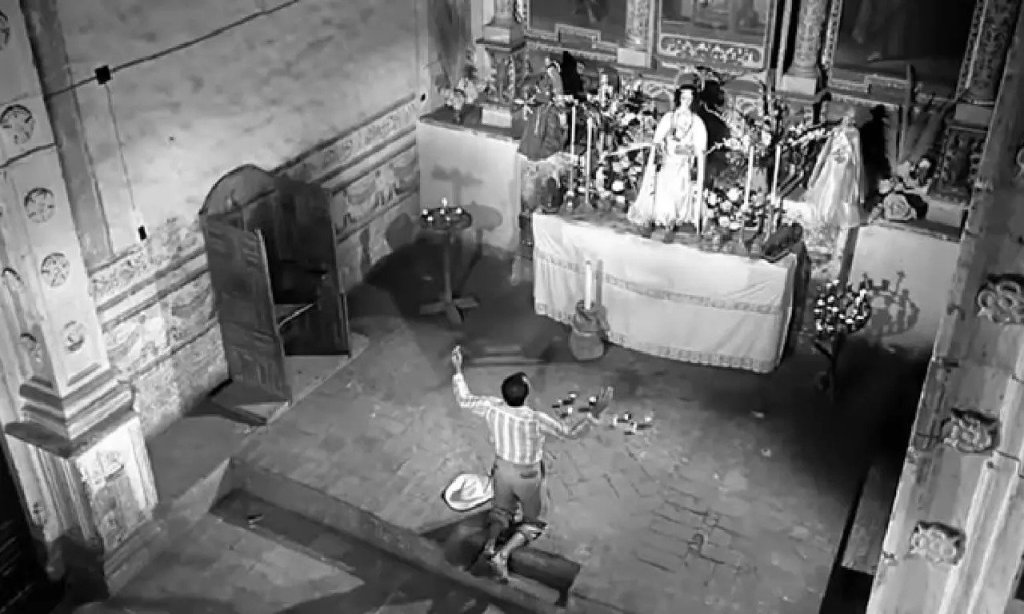
But still, Alcoriza gives us room to sympathize with Father Aurelio. When talking to the men who have been publicly shamed for not contributing to the price of the pearl, he tells them that as a priest he has to be severe, but as a man, he is very understanding. The priesthood only creates a barrier for him to understand the common man and so, through no fault of his own, he will never be able to connect to or move these people. The only characters in the film who are truly lampooned and caricatured are the rich tourists that come to the town. We see them force Eufemio’s son to perform tricks for them and later when a group of American tourists visit the Tlayucan church, they tattle on Eufemio for stealing the pearl. They may mean well, but these tourists only cause trouble.
In this veiled message to the Mexican film industry, Alcoriza is saying that the industry does not need to look towards an ephemeral and knowledgeable outsider. What Tlayucan needs is not a leader, but a force to unite these men so Eufemio, a man who has recently been denied work after defending the rights of his guild, and others like him don’t end up forgotten. One object can change everything and it’s not an industrial one brought in from the rich farms or a camera left by American tourists. It’s something natural, belonging to the earth: the pearl. This pearl matters a lot and not the way the Church thinks it does. The miracles it brings exist entirely outside the purview of the Church or its saints.
It’s a comic but poignant touch that almost immediately after stealing it, one of Eufemio’s pigs eats the pearl. The pearl is coming back to the Earth. The pearl’s tie to the town is greater than its ties to Saint Lucía. The pearl’s return is a joyous one that forces the townspeople to change for the better. While waiting for the pigs to poop out the pearl, they start thinking about their situation. Does a good man like Eufemio deserve to go to jail? Should we stand up for him? These thoughts are not provoked by a priest or a teacher, they belong to the common man. Alcoriza emphasizes this with his growing use of group shots over close-ups as the film goes on. The beginning may have focused on individual characters like Eufemio or Padre Aurelio, but the latter half is focused on the town at large. It’s almost anti-Gabriel Figueroa camerawork. Alcoriza does not create beautiful portraits of its protagonists with dreamy backdrops of the sky. Alcoriza focuses on people and the earth.

The pearl allows this town to finally be freed from political and social constraints. Just as Eufemio had stood up for them, his friends decide to do the same for him. After hours of watching and waiting for the pearl to appear, they realize Eufemio is a good man and he can work off the debt rather than go to jail for it. Even Don Tomás, the stingy landowner, decides to pay for his son’s treatment. A subplot in the movie featuring an old wealthy spinster and a blind beggar shows the sexual liberation brought forth by the pearl. Originally a frigid woman, she crosses sexual and class boundaries and begins a flirtation with this wandering beggar. Though they end up getting married at the priest’s behest, it still isn’t a traditional union. When the priest asks her before the wedding if she loves him, she replies, “How should I know?” This isn’t the kind of love she’s read about, it’s different but entirely natural and outside the Church’s ideals.
After the town’s conflicts are resolved, Eufemio’s wife serendipitously finds the pearl in her garden, where it belongs. When she shows Eufemio, they decide to secretly return it to the church. Then, in a mirror image of the opening scene, the church bells ring out. We see the townspeople enter and behold the miracle. Everyone believes this miracle is Christian, but its reappearance occurred outside its gates. Alcoriza further de-emphasizes the Church’s importance with the final shot: a group of pigs walking together. Early in the film, Eufemio was forced to sell some of his pigs, separating some piglets from their mothers. Now, they are back together. Progress may seem to be created through manmade institutions, but earthly objects contain more power than them. A pearl can unleash a strength and solidarity that was already alive but dormant in the town.
 The Cine Latino Blog
2 responses to “Tlayucan’s Heroic Objects”
[…] For the English version, click here […]
LikeLike
[…] of the country. Alcoriza directed several classics including the Academy Award nominated film, Tlayucan, about a poor man who turns to crime in a desperate attempt to cure his son’s illness. Throughout […]
LikeLike