


Para la versión en español, cliquea aquí
Synopsis
A Place in the World (1992) begins when 20-something-year-old Ernesto returns to the rural town he left as a young teenager. The rest of the film is told in flashback, centering on the year before he left when a Spanish man named Hans came to his town and disrupted the community and his family’s life.
Most passing Oscar fans will remember A Place in the World for its controversial disqualification from the Best Foreign Language Oscar race. Submitted by Uruguay, the film was nominated alongside other films like Indochine, Schtonk!, Daens, and Close to Eden. However, a week after the nominations were announced, the Academy launched an investigation into Uruguay’s artistic involvement and three days later disqualified it. However, there is so much more to this movie than just a case of bureaucratic fraud. Its director, Adolfo Aristarain, was one of the most prolific Latin American directors of the 1980s and 1990s and A Place in the World is his magnum opus. Using the story of a family in a period of traumatic transition to subtly examine the political and cultural shifts of the era, Aristarain creates a snapshot of a country in transition.

The early 1990s were transformative not just in Argentina but across the world. In 1989, the Berlin Wall fell and the Soviet Union soon dissolved. Argentina was three years into a Menem presidency whose marked corruption, radical free-market politics, and criminal activity made anybody hopeful of a new future for Argentina after the end of the dictatorship, hopelessly disillusioned. 1992 was also the year that one of the most influential political philosophy books of the past thirty years was written: The End of History and the Last Man by Francis Fukuyama. In it, Fukuyama argues that with the rise of Western liberal capitalist democracy and the fall of the Soviet Union, humanity had reached “not just… the passing of a particular period of post-war history, but the end of history as such: That is, the end-point of mankind’s ideological evolution and the universalization of Western liberal democracy as the final form of human government.” Though this thesis has been thoroughly challenged with the rise of authoritarian capitalist regimes, this was a strongly held belief of many conservative thinkers of the 1990s and many disappointed leftists.
The characters in Adolfo Aristarain know that the war is lost. When the mysterious Spanish geologist Hans, comes into town, he presents himself as the archetypal disillusioned revolutionary of the bunch by declaring that the primates won, brute force prevailed over idealists like Christ, Marx, and Bakunin, and that in this world, solidarity is no longer an option. But the heart and soul of this film are not in this pessimistic sentiment but in the words of Ernesto’s father: If the war for social justice has been lost, “at least we may have the luxury of saying that we won a battle.” Mario, his wife Ana, and their friends engage in small battles every day. Mario and Ana, university-educated people, install themselves in a rural town and open a school and a clinic. Their friend Nelda, a nun who is unable to change the conservative ideas of the town priest, refuses to wear a habit to show there is no difference between her and any other member of the town. This lesson is brought down to their son, Ernesto, who secretly teaches a local girl, Luciana, to read. When she tells him it’s a useless effort since she will still work a low-paying job in this town, Ernesto convinces her that even if the deck is stacked against her, improving herself is never a waste of time.

The search for better things is always honorable in the eyes of Ernesto and his family, but it is never without consequences. The price of utopia is a heavy one. For Mario, his utopia lies in this quaint rural town, but its peace is fleeting. The mysterious and evil mayor, Andrada, is convincing many residents in the town to sell their land for an outrageous amount of money. It’s no longer a place for his young son to grow up. But as Mario puts it, when you’ve found your place in the world, you can’t leave it behind. After years of being separated from his country due to the military dictatorship he will have to sacrifice his life with his family to keep the home he’s longed for. Aristarain’s characters have faced such an incredible amount of political and societal uncertainty that they know that utopias are fickle and not all their battles to preserve it can be won. Ana becomes disheartened by the death of a baby during a delivery and Mario commits arson in order to unite the workers of the town but it is to no avail.
Preserving one’s sense of identity and integrity is more important than any of those losses. Hans personifies this as the former idealist turned geologist mercenary. Through his growing friendship with Mario and his quiet infatuation with Ana, he becomes compelled to live like them. In the climactic meeting between Mario and Andrada in which Andrada refuses to tell why the people of the town are being bought out, Hans reveals himself. Though he has signed an NDA, he lets Mario know that he was brought by a Spanish multinational planning to set up a hydroelectric dam. He risks everything knowing that the future is inevitable. In his personal life, he does the same. Though he and Ana are deeply in love with each other, they never act on their desires. Cashing in on a business deal or having an affair with your friend’s wife would be very easy. But in order to preserve his own utopia, a world of good friends and heroic actions, he has to go without.
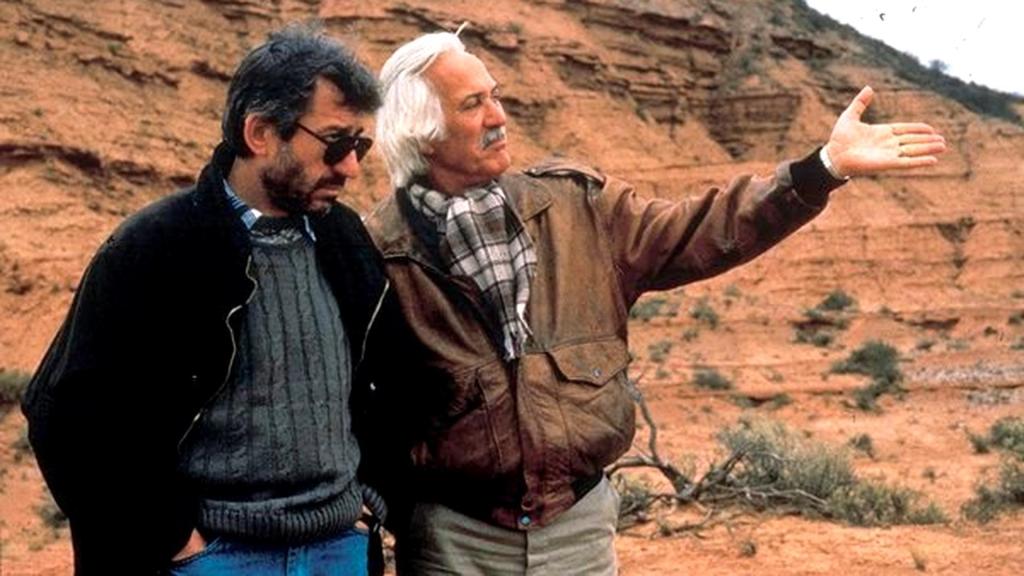
Years after the events of the movie take place, we find a 20-something Ernesto returning to his hometown alone experiencing the same dilemmas as his parents. Ernesto has become an exile thanks to foreign economic interests. He has lived in Buenos Aires and is planning to move to Madrid to study and hopes that one day he can find his place in the world. That search is what will define Ernesto, not the place itself. His final battle in town before being whisked away to the capital was that of the idealistic past vs the impending future. Throughout the film, young Ernesto would take his horse and race it against the local train. He lost every time until, on Hans’ final day, he got a little extra help and finally beat it. This is abruptly followed by Hans leaving town on that very same train. Ultimately, the companies and capitalist interests have far more power, but they remain unmemorable. Ernesto’s trials and triumphs will stand the test of time.
 The Cine Latino Blog
One response to “Finding A Place in the World”
[…] For the English version, click here […]
LikeLike