


Para la versión en español, cliquea aquí
Synopsis
La Fuga (2001) tells the story of several inmates who in the summer of 1928 escape from the National Penitentiary of Buenos Aires. Some die, some go out looking for revenge, and others look for a quiet life outside.
By the end of the 1990s, Eduardo Mignona was a highly acclaimed and sought-after director in Argentina and after winning a slew of international awards for his films, he decided to write a novel in 1997 called La Fuga, about a group of criminals who escape a prison. But when the time came for the story to be adapted for the big screen, Mignona was hesitant and would only do so under one condition: he would not be the sole screenwriter. For him, there was no point in recreating his novel exactly as he had imagined it just a couple of years prior. There had to be something different. Thanks to the collaboration of writers Jorge Goldenberg and Graciela Maglie, the film’s structure was redone and its timeline, instead of linear, bounced back and forth between their past, prison time, and freedom. This act not only kills the all-powerful auteur but creates a much different kind of heist movie.
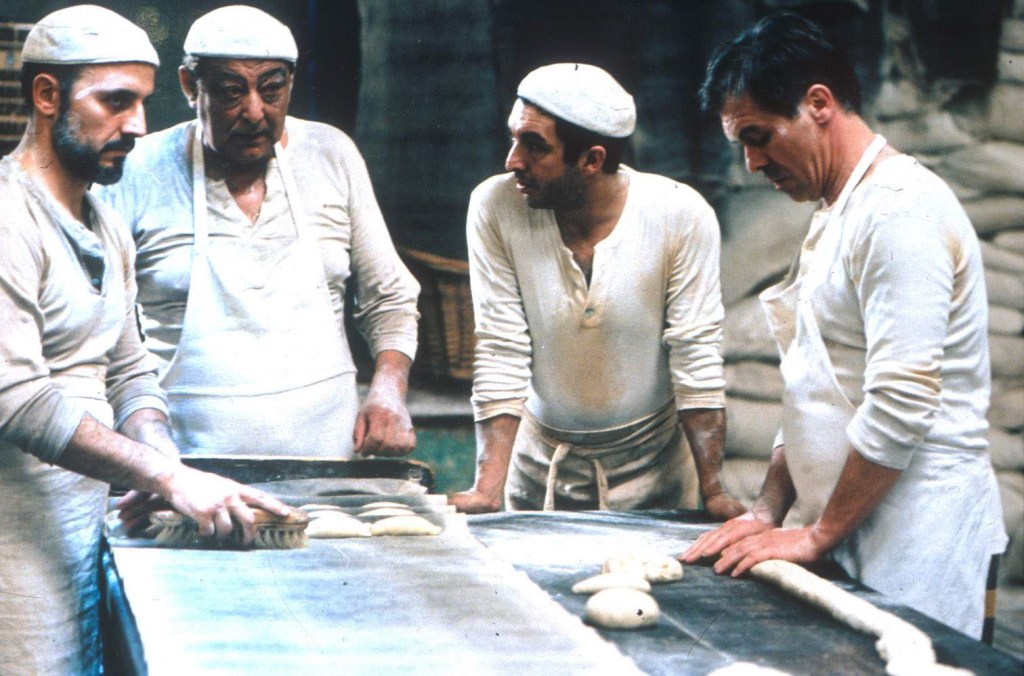
Still, the film contains much of the historical context that made Mignona’s novel so unique. Mignona takes the politically malleable story of a group of prison escapees and uses it to talk about the inescapability of destiny both as an individual and a nation. It’s no accident that our story begins in one of the most chaotic and important decades in Argentine history: the 1920s. Well represented in the story, anarchism was rising in popularity with revolts sprouting up across the country, including Patagonia, where an anarchist peasant uprising was suppressed by the army and resulted in the death of 1500 people and the assassination of military general Hector Varela. While anarchists got their share of reprisals, by the end of the decade, many died or disappeared into thin air like some of the anarchist convicts in La Fuga.
This political upheaval was destined for something far worse and the 30s became known as the infamous decade thanks to a coup, a large rural exodus, and years of political repression. The 1920s, while violent, offered a lot of possibilities but ended terribly. Was Argentina always fated to go down this path? La Fuga asks this very question with its structure. We are constantly bouncing between timelines, forced to wrestle with what it means to be free and if certain futures are inevitable. While we know from the start that every member of this group except for one manages to escape, we are still brought back time and again to their experiences in jail. No matter how much they travel, they are never too far from prison.
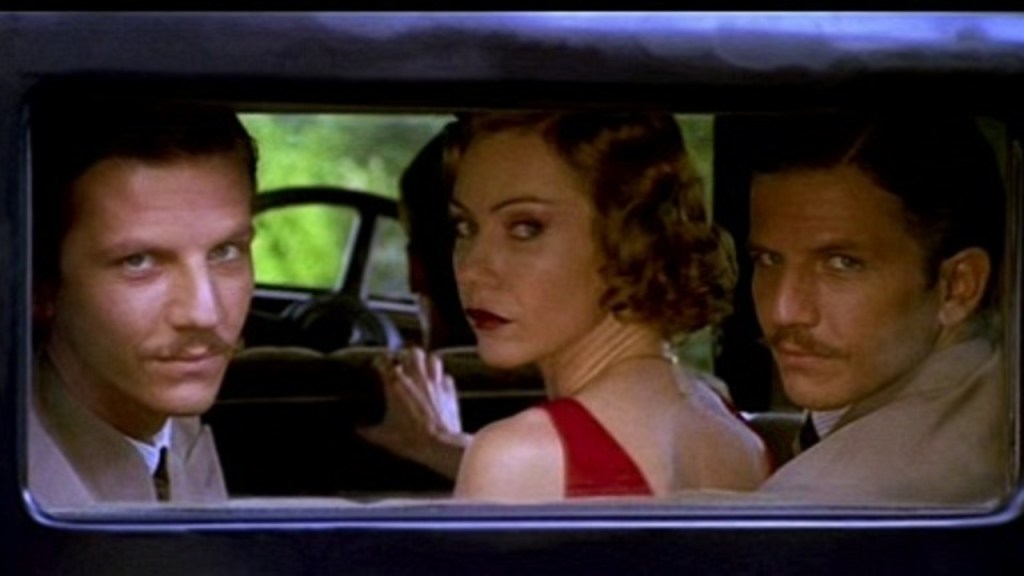
For some, escape means returning to the past and picking up exactly where you left off. This is the case for ‘El Pibe,’ an expert poker player played by Ricardo Darin. Immediately following his release, he goes back to the boss he knows betrayed him and restarts his affair with his wife, Tabita. It’s almost as though he is resigned to his fate. His newfound freedom is just a mirror image of his past. After deciding to do one last job for his boss and hustle a rich man at poker, he finds he has been betrayed, not by his boss, but by Tabita. After tricking him into playing until he passes out, he stumbles out and finds he was playing against a set of twins with energy to spare. The last thing he sees after being fatally shot is Tabita and two men wearing the same face and suit.
Some people are never even given the chance to relive their past as we see with El Pampa, one of the prisoners who dies during the attempted escape, and the old woman who dies of a heart attack after seeing the prisoners rise up from under the ground. Their deaths leave their loved ones stuck in time, unable to meet their destiny in the future. El Turco who, it is later revealed was in a relationship with El Pampa, begins living with his widow and constantly thinking of ways to get rid of his shame and honor him. Meanwhile, the old widower bystander becomes obsessed with this band of criminals as well as increasingly dependent on others to do his work for him. Whether forced or not, these characters become resigned to give up on their futures. For them, Argentina’s future is something they will not be a part of.
Mignona’s criminal band is not just made up of figures who disappear as soon as they achieve their freedom. Some make quite a mark in their searches for justice in a land that is becoming increasingly lawless, though to differing ends. Vallejo, the committed anarchist of the group, meets his end in a failed terrorist attack attempt during the visit of American President Herbert Hoover. When his detonation device fails before he can reach Hoover, he uses his last breath to warn the growing crowd and sacrifice himself. Another member of the group, Tomás, also vanishes after seeking personal justice by killing the men who murdered his family. Their search is in some way futile. Hoover survives and Tomàs’ family is still dead. However, they do achieve some small victories. If told in chronological order, these stories could appear more nihilistic than they really are. By changing back and forth between the past and present, these characters never really die. They are left in a kind of limbo, constantly resurrected in prison. In effect, even those doomed to the worst deaths or disappearances never really die.
For Mignona, there is still a way to escape unscathed. Irala, the narrator of the story finds himself unable to leave the coal store they left through, but he remains freer than all his colleagues. Out of a sense of grief, Irala returns to the coal store, and the old man, still obsessed with the crime that took place, doesn’t recognize him. In fact, he mistakes him for a family member and gives him a job. Rather than take advantage of this position or reveal his identity in a dramatic fashion, he simply accepts it. He lives a quiet but productive life with this man and inherits the shop upon his death.

The last time we see Irala is at the unveiling of the famous Obelisco monument in Buenos Aires in 1936. Erected four hundred years after the founding of the city, the monument stands at the exact spot the Argentine flag was raised for the first time in 1812. Each side of the obelisk represents an important moment in the history of the city as well as the country. In Mignona’s version of events, this historic unveiling was also the subject of vandalism from the start with El Turco using it to commemorate his friend, El Pampa, and their escape. The only other person in the crowd to understand this act of vandalism is Irala. In the midst of country wide turmoil and a commemoration for a monument that would come to define the city, Mignona reminds us that nothing is set in stone. Some men can escape to the same fate that awaited them in the past, others never escape, and some manage to live simple but happy lives.
 The Cine Latino Blog
One response to “Escaping Destiny in La Fuga”
[…] For the English version, click here […]
LikeLike