


Para la versión en español, cliquea aquí
Synopsis
Gatica, El Mono (1993) tells the story of one of Argentina’s most famous boxers, José Maria Gatica, who rose from a penniless childhood to a life of fame and glory that coincided with the rise and fall of Juan Perón.
When Leonardo Favio released Gatica, El Mono in 1993 after a seventeen-year absence from filmmaking, he was welcomed back with open arms and lauded for his portrayal of one of the most impactful figures in Argentine culture. A lifelong Peronist, Favio was forced into exile during Argentina’s military dictatorship and took the opportunity of his grand return to tell a story that adequately portrayed the complicated nature of Peronism and Argentina’s 20th-century history through the life story of boxer, José Maria Gatica. A bombastic figure who gave as good as he got, Gatica’s story represents all the glory and the vices of Argentina.
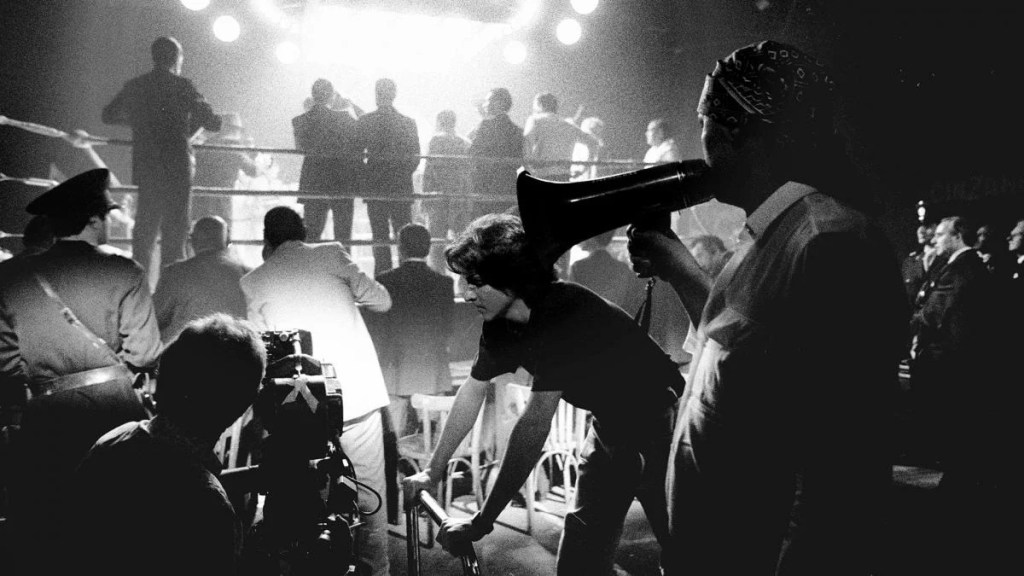
Unafraid to confront contradictions, Favio begins this biopic about an iconic Argentine star with a scene of immigration. Gatica, originally born in Córdoba, was an internal migrant to Buenos Aires at 10. As the opening credits fade, we see the image of a train pulling in and through the fog, a young boy emerges. Though born and raised in Argentina, he faces the same kind of discrimination any immigrant would face in the capital. Gatica is often left out of many clubs or theaters and is forced to grow up on the streets with his best friend known as “El Ruso” who also faces discrimination due to his Jewish roots. It is through this friendship that Gatica is given the opportunity to become a symbol for the nation. “El Ruso” becomes the first to fight in the ring and soon introduces Gatica to this world. His trajectory as the new macho Argentine is cemented from this moment when Ruso, crying because he cannot handle boxing life, cries in Gatica’s arms until Gatica declares that he does not need to fight. Gatica will be doing all the fighting here.
By the time he becomes famous, he is no longer viewed as an outsider from the provinces. With his love for partying and tango, some even mention his resemblance to the most revered Argentine of the time, Carlos Gardel. In all, Gatica is the embodiment of every good and bad quality of the new man under Peronism. He is strong in the ring as well as a womanizer by night. His pride makes him one of the toughest contenders in his country but it also gives him a hair-trigger impulse for any potential offenses. God forbid anyone calls him by his nickname, “Monito” or he will immediately respond, “Monito, las pelotas, a mi se me respeta.” Whether it’s a stranger or even his wife, everyone has to treat him with this kind of royal reverence. The day his wife tries to say goodbye before leaving for good, the only thing he can bring himself to say is, “Para hablar con Señor Gatica, se pide audiencia” or “to speak with Mr. Gatica, we request an appointment”.
Gatica doesn’t try to represent anyone or any movement, he can’t help it. Later in his life, when his political beliefs are questioned, he says, “I never got involved in politics… All my life I was a Peronist”. Favio does not show us any major political rallies Gatica attended and appearances from the Peróns are few and far between. Yet, the two are intimately linked. Favio intercuts the film with several newsreels of Gatica’s training and successes spliced in with important events in the Peronist era like the liberation of Juan Perón on October 17th, 1945. One second we hear the roar of striking workers yelling for the release of their leader and the next we hear a crowd screaming Gatica’s name. Though the sound of the crowd is immense, we cannot see them for all the Argentinean flags that surround him. And so, his victories become the victories of Juan Perón.

Still, Favio does not shy away from showing how egotistical and childish this great symbol could be. A kind of Jake LaMotta figure, his political career is interconnected to his own personal follies. One montage featuring magazine covers with Gatica praising Perón’s new Argentina ends with the image of Gatica on a cover holding a beautiful woman. We immediately cut to a scene of the fighter and his wife arguing and him pleading unconvincingly that it was not his idea and it’s only a magazine. He is as incapable of separating himself from Peronist politics as he is incapable of becoming an ideal and morally upright emblem of the movement.
Gatica is at the mercy of this political tide and he moves with it. From the start, his fate lies at the whim of the crowd and not any leader. In every fight, when the crowd screams louder than any punch from Gatica, we know he is going to win. However, the second the sound of the announcers overpower the crowd, we know that this will not be Gatica’s day. It’s also the crowd that lets us know when Gatica has lost his position in boxing and Perón’s popularity has fallen. After a montage of newsreels showing the protests, destruction in the streets, intimidation, and terrorism ending with Perón fleeing the country, we see Gatica posing in front of a stream of Argentine flags after a win like always. This time, however, the crowd boos him as he screams out “Long live Perón!” Without their support, his career and his life are over.
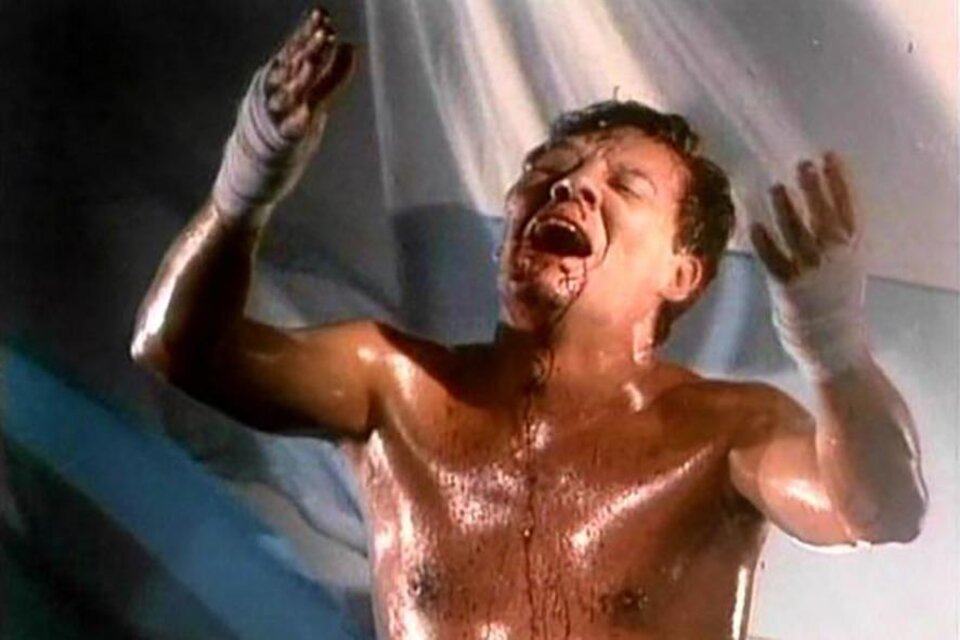
As if alienating himself from the vast boxing crowds of his country wasn’t enough, he alienates himself from his closest allies, even “El Ruso.” Gatica ends his life in Buenos Aires where he began it: on the streets, no longer allowed in the clubs he haunted frequently in his heyday. Finally, after celebrating a win by the soccer team, Independiente, anonymously in a crowd, Gatica is run over and killed. His friend tries to flag down help but no one will stop for this great fighter. In the last moments of his life, flashes of his brilliant career and celebrations draped in the colors of his nation fly off the screen. To modern audiences, Gatica might remind some of Diego Maradona: a bombastic, larger-than-life character who became a man of the people whose politics couldn’t be untethered from his turbulent personal life. In fact, Gatica’s triumphs and follies are timeless. Favio’s portrait of this troubled fighter packs a punch without being heavy-handed and shines a light on what happens when a symbol has more power than a man.
 The Cine Latino Blog
One response to “Gatica, El Mono: Argentina’s Raging Bull”
[…] For the English version, click here […]
LikeLike