


Para la versión en español, cliquea aquí
Synopsis
La Película del Rey (1986) is set in the waning days of the dictatorship and follows a Buenos Aires movie director who decides to make a movie about the legendary Frenchman, Orélie-Antoine de Tounens, who became the King of Patagonia. He decides to film on location but soon several problems arise leading the ambitious but often delusional filmmaker to finish his movie on his own.
We tell ourselves stories in order to live. Joan Didion may have been the first person to write and publish those lines but this sentiment has been a timeless one throughout history. It’s something Latin American artists have had to contend with. In a continent with so many rising and falling empires and unnecessary and sometimes inconceivable acts of violence, it may seem vital for survival to make up for these nonsensical changes of power with a linear, narrative idea of this continent’s historical trajectory. But in a land that gave birth to magical realism, history can only be understood as a fractured and cyclical mess.

In his debut film, Carlos Sorin won the Silver Lion Award for Best Debut at the Venice International Film Festival for his meta-story about how history can never be tucked away in the past. In this story about a Frenchman who becomes the king of a region that is currently a part of a larger country, these far-flung events become familiar. The 1980s were a turbulent time for Argentina. The Dirty War, a series of right-wing military governments across South America saw state terrorism reign in Argentina, killing many and oppressing even more. By 1986, Argentina was only three years into a democracy which seemed fragile. It’s no wonder that in La Pelicula del Rey, the line between the past and the present and reality and fiction is so blurred. Accuracy is hindered by the ways history continues to repeat itself. Their titular protagonist’s scenic horse drawn gallop is interrupted by the sights and sounds of a busy Buenos Aires street and the scenic views of Argentina’s indigenous land is cluttered with large oil drills. It’s a straight line that leads from colonial violence to the modern dictatorial kind.
As La Pelicula del Rey makes clear, the white men brought alcohol and syphilis, turning a nation of warriors into cowards. It’s a critique that not only implicates modern Argentine society, but the film itself. In a story about a Frenchman who either foolishly or bravely declares himself the King of Patagonia, is the director of this film within a film also a crazy Quixotic character? The moviemaking process is constantly hindered by the follies of modernity. Thanks to the myriad of problems plaguing his set, this director who will only work on his own terms is forced to finish his film alone, taking on the main role, and surrounded by a team of mannequins. These inanimate figures also point to contemporary times. The haunting crowd is incredibly reminiscent of the desaparecidos of his day.
These practical mistakes create holes in the fabrics of the very old Western genre itself. Most films of the genre rely on the idea of the “savage native” that pillages lands and kidnaps unsuspecting white women, leading to the destruction of moral society. By focusing on Orélie-Antoine de Tounens and the ill-fated filmmaking process he inspires, we see that the lens we view history by is not large enough to see its many complications. Tounens is at times a figure of hope, stupidity, and power. The Frenchman was a lawyer turned adventurer who united the Mapuche nation against Santiago. While most other Europeans dreamed about the knights of the round table, Tounens spent his time fantasizing about the Mapuche.

He arrived in Valparaiso in 1858 and began exchanging letters with the Mapuche Chief, Mañil. Together, they decided to stop the Chilean invasion. After all, Mañil knew it was much harder to invade an indigenous nation with a European leader. In 1860, like an excited child, he arrived with a flag he designed himself and proclaimed himself King of Patagonia, drew up a constitution, and established a cabinet. The good times didn’t last long and in 1862, Tounens’ guide tipped off the Chilean government and he was captured and hauled off to the capital since the government could not handle the thought of a “French Invasion”. The Mapuche population subsequently fell 90% and Tounens returned in vain to try to rule his kingdom not once, not twice, but three times. It’s hard to say whether his efforts at creating a new nation equipped with a new national anthem and flag were silly aspirations from an incompetent adventurer or shrewd tactics to aid the Mapuche in gaining legitimacy.
This legend is a double edged sword that can both inspire people to keep fighting against the oppression that continues to infiltrate our society or it can encourage someone to keep dreaming no matter how out of reach and unrealistic it is. Like Tounens before him, the film’s director leaves the set after a disastrous attempt to make an anticolonial film in the face of a repressive government and starts immediately dreaming of his next film about Pedro Bohórquez. Bohorquez, also known as the false Inca, was a Spanish adventurer who around 1656 crowned himself the new Incan emperor. He married a young indigenous woman and learned Quechua. He also told the Calchaquí natives that he was the last descendant of the Inca emperors and his name was Inca Hualpa. Though, it seems clear that the natives did not believe his story, they saw him as a useful tool against Spanish rule. Like Tounens, it was a doomed effort, but it differed in that Bohórquez’s role was a bit more dubious. Some say he was motivated simply by the rumor that the Calchaquíes knew the location of precious hidden metals leading him to promise the Spanish and Jesuits subjugation while continuing to placate his new subjects.
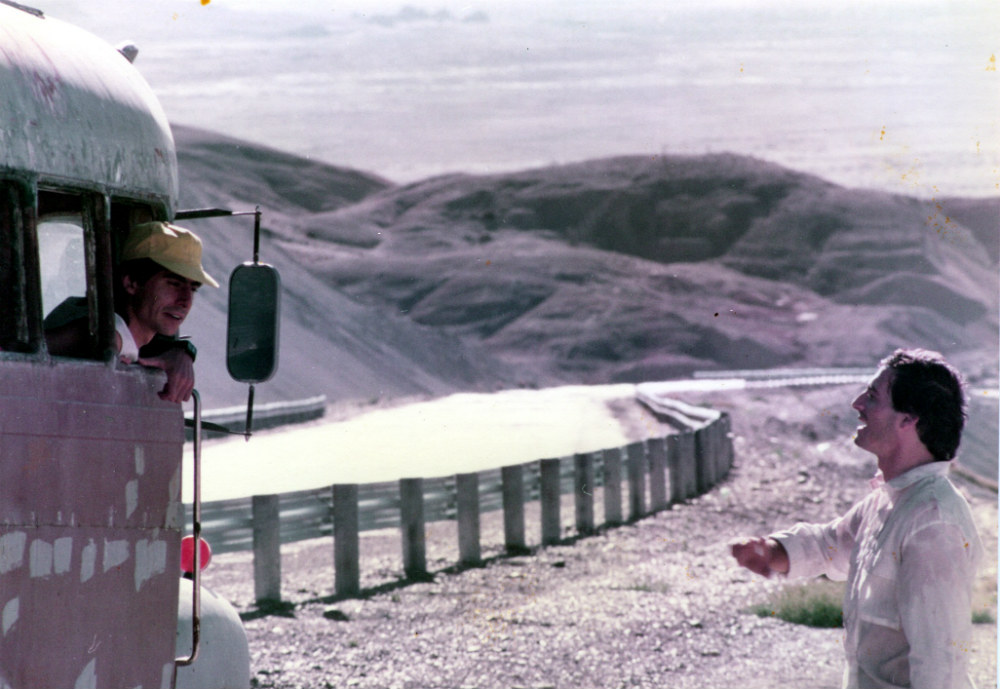
Our young director seems to be moving on a path that idealizes ill-fated and ill-equipped men with increasingly selfish motivations. Is this an inevitable drive of cinema? Our stories fuel our imagination and keep us fighting but they can also lead us astray. Does our need to tell stories lead to lies and fabrications? The director’s name may be David but Ulysses or Quijote seems to suit him better. We’d be crazy to predict where his film will end up but we can hope that his efforts will not be in vain.
 The Cine Latino Blog
2 responses to “La Película del Rey: History Never Dies”
[…] For the English version, click here […]
LikeLike
[…] in several of his movies, including the inaugural Goya Award winner for Best Iberoamerican Film, La Pelicula del Rey, about a director set on making a film about the legendary Frenchman, Orélie-Antoine de Tounens, […]
LikeLike